The BNPCC Hub

Welcome to the BNPCC Hub

The Hub is an online space to support the work of the Brisbane North Palliative Care Collaborative.

This page no longer requires a login-to access. Sensitive documents are restricted with a member-only password. Please contact the PHN if you do not remember the password.

Welcome to the BNPCC Hub

The Hub is an online space to support the work of the Brisbane North Palliative Care Collaborative.

This page no longer requires a login-to access. Sensitive documents are restricted with a member-only password. Please contact the PHN if you do not remember the password.

  • palliMEDs App has been updated- now includes paeds

    [From Caring@Home]

    caring@home is proud to launch a new version of the trusted palliMEDS app.

    palliMEDS contains prescribing information for medicines most useful to manage common end-of-life symptoms in the last weeks of life.

    The addition of paediatric prescribing* information strengthens the capacity of primary care prescribers to deliver timely and effective palliative care for all patients.

    Features:

    • Supports clinical decision-making for primary care prescribers and knowledge for nurses delivering end-of-life care
    • New paediatric prescribing information with a weight-based dose calculator
    • New adult medicine added - dexamethasone
    • User-friendly interface
    • Equianalgesic dose opioid calculator
    • Access recommended medicines, dose based on weight

    [From Caring@Home]

    caring@home is proud to launch a new version of the trusted palliMEDS app.

    palliMEDS contains prescribing information for medicines most useful to manage common end-of-life symptoms in the last weeks of life.

    The addition of paediatric prescribing* information strengthens the capacity of primary care prescribers to deliver timely and effective palliative care for all patients.

    Features:

    • Supports clinical decision-making for primary care prescribers and knowledge for nurses delivering end-of-life care
    • New paediatric prescribing information with a weight-based dose calculator
    • New adult medicine added - dexamethasone
    • User-friendly interface
    • Equianalgesic dose opioid calculator
    • Access recommended medicines, dose based on weight and administration routes.

    *The paediatric component was developed in partnership with the Quality of Care Collaborative Australia.


    Download the App

  • Prepare for National Palliative Care Week with the Supporter Kit

    [from PCA]

    National Palliative Care Week 2026 (NPCW) will take place from 10-16 May, and this year’s theme is Getting to the heart of it: Big Questions. Real Answers.

    We’re pleased to share the National Palliative Care Week 2026 Supporter toolkit, available to download here, to help you spread the word across your organisation, networks and community.

    Inside the toolkit, you’ll find:

    • key messages
    • social media tiles and suggested copy
    • campaign branding and other digital assets
    • facts and information to support conversations about palliative and end-of-life care.

    You can find more resources on the Palliative Care

    [from PCA]

    National Palliative Care Week 2026 (NPCW) will take place from 10-16 May, and this year’s theme is Getting to the heart of it: Big Questions. Real Answers.

    We’re pleased to share the National Palliative Care Week 2026 Supporter toolkit, available to download here, to help you spread the word across your organisation, networks and community.

    Inside the toolkit, you’ll find:

    • key messages
    • social media tiles and suggested copy
    • campaign branding and other digital assets
    • facts and information to support conversations about palliative and end-of-life care.

    You can find more resources on the Palliative Care Australia website, including campaign materials, posters, logos, social media assets, event information, orange heart merchandise, and advice, tools and support.

    Explore the campaign page here.

    As part of this year’s campaign, we’ll also be inviting you to join our livestream of the 2026 National Palliative Care Week Lecture, Rethinking Dementia and end of life care, at 12:30pm (AEST) on Thursday 14 May. The lecture will be delivered at Parliament House by a leader in palliative care, Dr Michael Chapman. Please find more information and registration link here.

    However you choose to mark NPCW 2026, your support helps raise awareness and encourage better understanding of palliative and end-of-life care.

    If you’re sharing your support online, please use the campaign hashtags:
    #NPCW2026 #GettingToTheHeartOfIt #BigQuestionsRealAnswers #MattersOfLifeAndDeath

    Thank you for helping Palliative Care Australia raise awareness and continue to normalise conversations about palliative and end-of-life care.

  • Palliative Care in Hungary and Romania tour in September

    Jon Baines tours are having hosting another palliative care tour in September.

    [From Jon Baines Tours]

    Under the expert guidance of David Oliviere, gain insight into how the distinctive spiritual identities and rich cultural heritage of Hungary and Romania have shaped attitudes towards life, death and caregiving.

    Travelling in the company of like minded professionals, you will gain an in depth understanding of how palliative care services are delivered across these two nations. Your journey will include visits to Budapest Hospice House, Pécs Medical School and its palliative care service, as well as the renowned Hospice Casa Speranței – the House of Hope. Meet with the rural palliative care team in the town of Făgăraș and visit Bucharest Hope Hospice, the most modern facility of its kind in the country, where you will meet one of the pioneers of Romanian palliative care.

    Experience the spectacular, unspoilt countryside, rustic medieval villages and the outstanding urban landscape of Budapest, with its scenic views of the Danube. Enjoy excellent local food and wine, and immerse yourself in the eclectic ethnic mix that continues to shape the character, and care traditions, of these remarkable countries.

    13 Sep – 23 Sep 2026 (10 nights)


    More information: https://www.jonbainestours.com/tours/palliative-care-in-hungary-and-romania


  • Join the Queensland Palliative Care Clinical Network mailing list

    Queensland Palliative Care Clinical Network lead decisions and give expert advice about palliative care and end of life health.

    Each week they provide a network update to their mailing list on QPCCN business, career and CPD opportunities, requests for feedback and more.

    You can join the mailing list by using this form.

  • PallConsult Educators' Muster – End-of-life care skills registration closes 1 May

    PallConsult delivers Educators' Muster events for clinicians who undertake clinical educator and facilitator roles in work areas that support patients in the last 12 months of life. These two-day events foster collaboration, share strategies and facilitate effective mentoring for frontline nursing, QAS and allied health clinicians across community, aged care and acute care settings.

    The program is designed around sharing train-the-trainer principles, ensuring that educators gain the knowledge and confidence to cascade training within their local services.

    Muster 1: Metro North Registrations close Friday, 1 May 2026

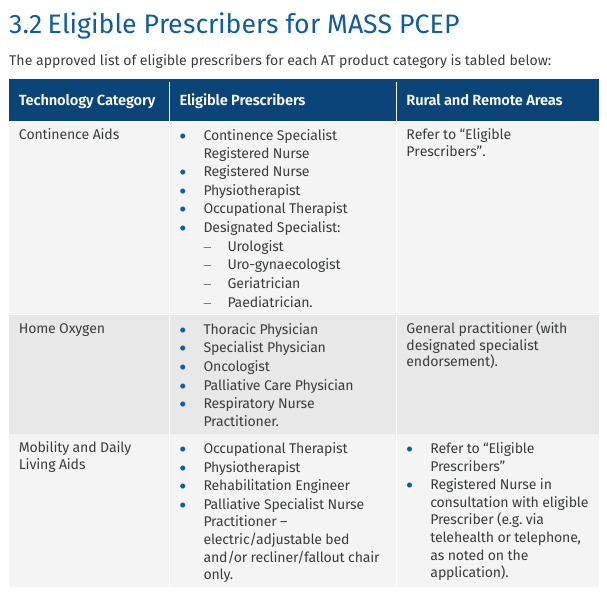
  • MASS PCEP First Nations Consumer Resources Project
    supporting image

    [From MASS PCEP]

    The Medical Aids Subsidy Scheme (MASS) has partnered with the First Nations Health Office to review and develop consumer resources for the Palliative Care Equipment Program (PCEP). We are now seeking feedback from prescribers and consumers to further edit and finalise the resources.


    Resources include handouts about: MASS PCEP and Continence Aids, Daily Living and Mobility Aids, Home Oxygen, Syringe Drivers (pumps). The documents have been drafted with input from several external stakeholders.


    Each document has been developed in line with the governing MSH procedure - PR2023-342 Metro South Health Delivering Health Literate Services. The documents are written in the Easy English (low literacy, English as a second language) and Plain English (grade 7-9 reading level) writing styles.

    The team are now seeking feedback from prescribers and consumers to further edit and finalise the resources.

    Feedback to be provided by 30 April 2026.

    Survey (click)

    Please contact Simone Dullaway, MASS PCEP Clinical Advisor, for more information: MASS-PCEP@health.qld.gov.au.

  • Research grant opportunity: Childhood dementia

    New National Health and Medical Research Council (NHMRC) grant opportunity:

    A Targeted Call for Research (TCR) is a one-time request for grant applications designed to stimulate research in a particular area that will benefit the health of Australians or address a specific health issue. This TCR aims to accelerate research that transforms the diagnosis, care and therapeutic landscape for children with dementia and their families.

    The proposed objectives of this grant opportunity are to:

    • Develop rapid diagnostic pathways to improve screening and diagnosis. This includes improving clinician awareness, creating standardised protocols, and enabling timely access to treatment and support through

    New National Health and Medical Research Council (NHMRC) grant opportunity:

    A Targeted Call for Research (TCR) is a one-time request for grant applications designed to stimulate research in a particular area that will benefit the health of Australians or address a specific health issue. This TCR aims to accelerate research that transforms the diagnosis, care and therapeutic landscape for children with dementia and their families.

    The proposed objectives of this grant opportunity are to:

    • Develop rapid diagnostic pathways to improve screening and diagnosis. This includes improving clinician awareness, creating standardised protocols, and enabling timely access to treatment and support through rapid diagnostic approaches.
    • Design and evaluate evidence-based multidisciplinary care frameworks for children diagnosed with dementia. This should include rehabilitation therapies, symptom management strategies for pain, sleep, communication, mobility and behavioural issues, as well as integrated palliative care approaches. Education for healthcare professionals and carers on managing complex symptoms should also be considered.
    • Advance therapeutic developmentand health system readiness through translational research that will uncover disease mechanisms and identify novel therapeutic targets. This should also include building capacity in the healthcare sector to increase access to disease modifying treatments for affected children. The research should also address systemic barriers such as education, referral pathways and care coordination with the aim to develop evidence-based guidelines to standardise and reduce variation in care.
    • Improve psychosocial and family support by developing and testing interventions that address the mental health, grief and wellbeing of families and carers. Research should focus on scalable models for psychological support and care coordination to reduce caregiver burden and strengthen family resilience.


    See https://www.grants.gov.au/Go/Show?GoUuid=f0036c4b-600e-4b4d-8bb9-de234b721ac6 for more information

  • Help decide delirium research priorities

    Delirium is:

    • a sudden change to a person’s mental state that can be related to the effects of illness, injury, having surgery, medicines, or withdrawal from drugs or alcohol.
    • a medical condition, which is often not recognised and needs urgent medical care.
    • a temporary condition that develops quickly over hours or days but can last a few days or weeks. 
    • different from dementia which occurs more gradually and for a longer time, but both can happen at the same time.  
    • more common in older people and people living with dementia but can affect anyone.


    People with delirium can find it

    Delirium is:

    • a sudden change to a person’s mental state that can be related to the effects of illness, injury, having surgery, medicines, or withdrawal from drugs or alcohol.
    • a medical condition, which is often not recognised and needs urgent medical care.
    • a temporary condition that develops quickly over hours or days but can last a few days or weeks. 
    • different from dementia which occurs more gradually and for a longer time, but both can happen at the same time.  
    • more common in older people and people living with dementia but can affect anyone.


    People with delirium can find it hard to: 

    • deal with the symptoms, such as seeing or hearing things that are not there.
    • trust the people caring for them.
    • manage emotions.  
    • communicate their needs.  
    • make decisions.  
    • care for themselves.

    Delirium can be frightening. It can lead to slower recovery from illness, and longer hospital stays.

    What matters most to you

    In our first survey, which closed in September 2025, we invited patients, carers, and healthcare staff to tell us what questions about delirium they thought were most important for research to answer. Thank you to everyone who contributed and shared their questions.

    A total of 186 people took part in the first survey and submitted 513 questions. We carefully reviewed all the questions and combined them into 40 summary questions. Our research team then undertook a detailed review of published evidence to confirm which questions have not been answered by research yet.

    Now, we need your help to decide which of these summary questions are the most important to you. Your input will guide future delirium research priorities.


    Why is this study important?

    Understanding what people think are the most important topics for delirium research can help us improve the care and wellbeing of people with delirium.


    Who should take part in this study?

    • People who have had delirium.
    • People who have cared for someone with delirium, e.g. family members
    • People with health conditions that increase the risk of delirium (e.g. people living with frailty or dementia, cancer), and their carers or family members.
    • Healthcare staff caring for people with or at risk of delirium (e.g. doctors, nurses, allied health professionals)


    You must live in Australia or New Zealand and be aged 18 years or older to take part in this questionnaire.


    How can I take part in the study?

    If you would like to take part in the study, please complete our survey. The survey should take 10 – 15 minutes to complete. By submitting your responses, you consent to participate.

    If you would like to be involved in the next stage of the study, we will request some contact details at the end of the survey. Your information will be kept safe on a password-protected drive that only the project team can use, and we will delete them once the study is complete.

    Access survey here


    See more information: https://www.delirium.org.au/research-priorities

  • CarerHelp resources and free online sessions
    supporting image

    [From CarerHelp]

    Resources

    Carer Information Kits and Rural Carer Kits back in stock! These kits provide core information to prepare families for end of life caring.

    Order your Kits now at Order resources - Resources

    We are also delighted to share our new ‘Caring in Aged Care Homes’ page and resources with you. Please take some time to explore these resources as they will help families who are considering transitioning to an Aged Care Home.

    Free online sessions

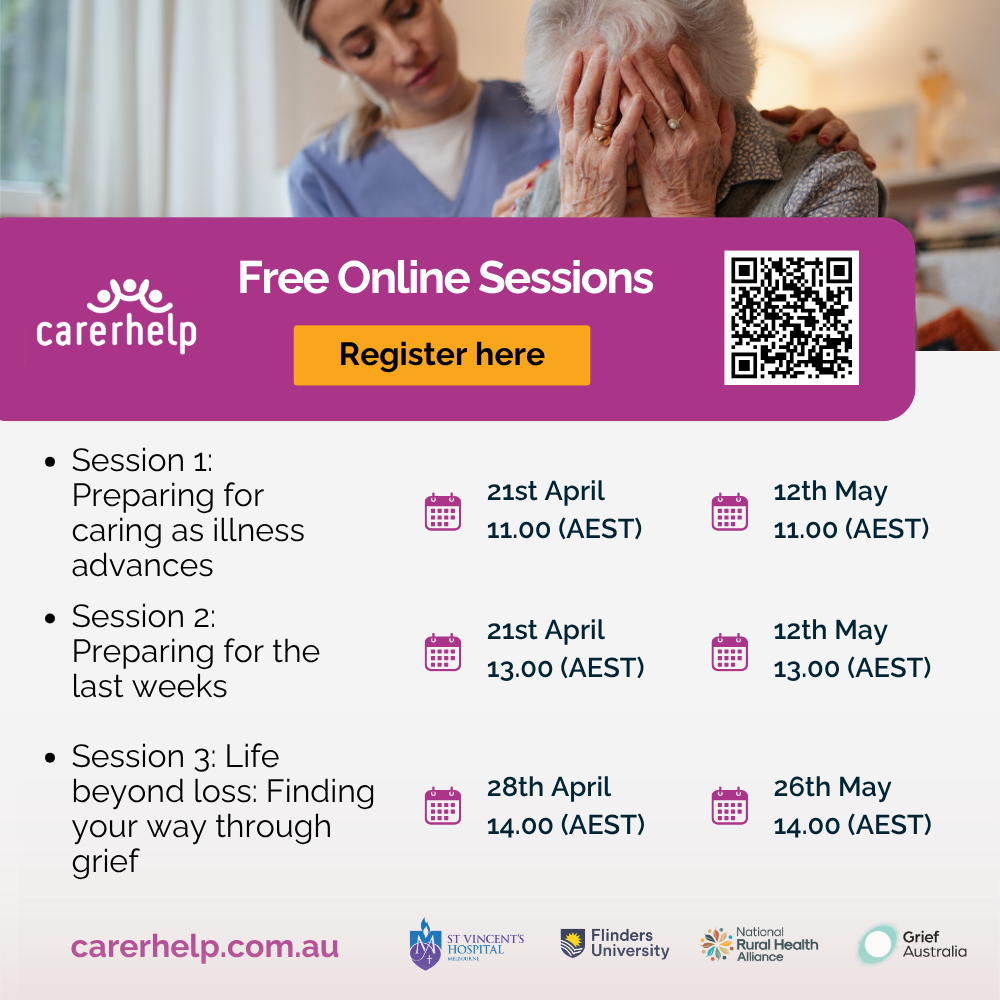
    We are also offering free online sessions for families caring for someone nearing the end of life. Led by experienced

    [From CarerHelp]

    Resources

    Carer Information Kits and Rural Carer Kits back in stock! These kits provide core information to prepare families for end of life caring.

    Order your Kits now at Order resources - Resources

    We are also delighted to share our new ‘Caring in Aged Care Homes’ page and resources with you. Please take some time to explore these resources as they will help families who are considering transitioning to an Aged Care Home.

    Free online sessions

    We are also offering free online sessions for families caring for someone nearing the end of life. Led by experienced health professionals, these sessions cover a range of topics and are designed to meet carers where they are on their journey. Carers can find out more and self-register here.

    Upcoming dates include:

    Preparing for caring as illness advances

    • April 21 at 11am
    • May 12 at 11am

    Preparing for the last weeks

    • April 21 at 1pm
    • May 12 at 1pm

    Living beyond loss: Finding your way through grief

    • April 28 at 2pm
    • May 26 at 2pm

  • palliAGED Introduction modules refreshed

    [from palliAGED]

    The palliAGED Introduction Modules have been co-designed with industry and re-aligned to the strengthened Aged Care Quality Standards. The refreshed modules now also consider all aged care settings, the roles of the interprofessional care team including family and carers, and present interactive 10-minute learning activities on a range of topics that connect to practice.

    What’s new?

    • Same trusted content, but with more practical tips and evidence-based resources
    • Realistic scenarios for Support at Home and Residential Aged Care
    • Consideration for cultural safety, role clarity, and self-care embedded throughout

    Easy access via the palliAGED website, no cost, and a certificate

    [from palliAGED]

    The palliAGED Introduction Modules have been co-designed with industry and re-aligned to the strengthened Aged Care Quality Standards. The refreshed modules now also consider all aged care settings, the roles of the interprofessional care team including family and carers, and present interactive 10-minute learning activities on a range of topics that connect to practice.

    What’s new?

    • Same trusted content, but with more practical tips and evidence-based resources
    • Realistic scenarios for Support at Home and Residential Aged Care
    • Consideration for cultural safety, role clarity, and self-care embedded throughout

    Easy access via the palliAGED website, no cost, and a certificate of completion once you are done.


    Explore modules: https://www.palliaged.com.au/Supporting-Services/palliAGED-Products/palliAGED-Introduction-Modules

Page last updated: 26 Oct 2026, 04:20 PM